Somebody Wore These Before You: The Quiet Economy of Earlsfield ABC's Kit Store
The cupboard sits where nobody would put a cupboard if they were starting from scratch: wedged beside the fire exit, under the fuse board, behind a stack of mats that never quite go back the way they came. The key hangs on a nail. Everyone senior knows which nail. Nobody talks about the nail, because talking about it would mean admitting how much the gym depends on what's behind the door.
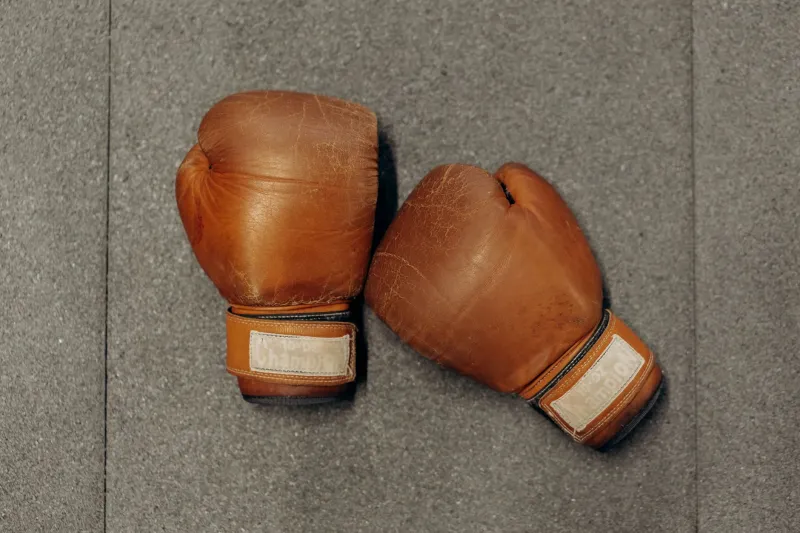
Open it and you get a smell before you get a picture. Leather gone soft and slightly sweet. Dettol. A faint chemical tang of rubber that's been warm for years. Then the picture catches up — shelves of gloves paired by length of wrist strap rather than brand, headguards hung on butcher's hooks, a plastic tub of ropes coiled like something you'd find in a shed.
Head coach Martine calls it the kit store. Everyone else calls it the cupboard. Either way, it is the reason a fourteen-year-old from the Garratt Lane estate can walk in on a Tuesday and be sparring by Thursday.
The Giving Side of the Nail
Nothing in there was bought new by the club. Not one item. It is all donations — kids who outgrew their first pair, parents clearing a hallway, a former member who moved to Leeds and left two carrier bags on the step with a note that just said "thanks".
Martine is blunt about why it exists. "Amateur boxing has a cost of entry and it isn't the membership fee," she says. "It's the bag. It's the boots. It's the headguard that has to be right or you're not sparring. You can talk all day about how welcoming a gym is. Then a kid turns up with nothing and you find out how welcoming it really is."
The cupboard closes that gap. There's no formal loan scheme, no form to sign, no deposit. A coach hands you gloves, writes your name on a bit of tape stuck to the shelf, and expects them back when you've got your own. That's the whole policy. It runs on trust and it works, mostly, because the alternative — a shelf full of kit nobody dares lend — helps nobody.
What a Coach Actually Checks
This is where the cupboard stops being a nice story and becomes a job.
Every donated item gets looked at by a coach before it goes anywhere near a boxer. Gloves first: press the knuckle padding with a thumb and feel for the compacted patch that means the foam has gone. Flex the wrist. Look at the seam along the palm, because that's where they split first. Smell the inside, which is unpleasant and non-negotiable — if it's gone sour right through the lining, it's finished, no matter how good it looks from outside.
Headguards get a harder look, because headguards are the one bit of borrowed kit where a failure actually hurts someone. Straps get pulled to check the elastic hasn't gone. Cheek pads get squeezed. The coach turns it inside out and runs a hand around the lining for cracks in the foam. Anything with a compressed crown or a perished strap goes in the black bin by the door, and the bin gets emptied, and nobody argues.
Ropes and wraps are the cheap end and the easiest to sort. Skipping ropes get a knot retied and a bit of tape on a fraying handle. Hand wraps that have gone stiff get washed hot and come back a size smaller, which is fine for a junior. Boots are rarer and go quickest.
The Mending Tin
On the middle shelf there is a tin that used to hold Christmas biscuits. Inside: a curved needle, waxed thread, a blunt awl, spare laces, three different gauges of elastic, and a roll of gaffer tape that has been in there so long the pattern has worn off.
Volunteer coach Dean does most of the mending on a Friday night while the senior session runs, sitting on an upturned crate with the tin open on his knees. He'll re-stitch a palm seam, replace a lace, tape a split wrist strap. He reckons he keeps maybe a third of the donated gloves in circulation an extra season or two.
"A glove isn't done because it's ugly," he says. "It's done when the padding's gone or the lining's had it. Ugly is fine. Ugly just means somebody used it properly. I've got a pair in there from 2019 with more tape than leather and they're still the safest things on the shelf, because the foam in them is genuine."
That distinction — worn versus unsafe — is the whole skill of the cupboard. Getting it wrong in one direction wastes kit and costs families money. Getting it wrong the other way puts a kid in the ring with a glove that won't protect their hand.
The Hard Call
Some things don't get passed on, and the conversations around those are the quietest in the gym.
A donated headguard that looks immaculate but has a hairline crack in the foam. A pair of competition gloves with a knuckle that's gone soft, fine for bag work but not for sparring. Dean's rule is simple: if he wouldn't put his own kid in it, it doesn't go on the shelf. Martine's rule is simpler still: if there's doubt, there's no doubt.
Condemned kit doesn't always go in the bin. Bag gloves with dead padding become wall padding. Old wraps become rag. Anything genuinely dangerous gets cut — straps sliced through before it hits the skip, so it can't be salvaged out of the bin and end up back in circulation somewhere else. It feels wasteful and it isn't. It's the difference between a cupboard people trust and one they don't.
Why a Borrowed Glove Carries Weight
Ask the seniors and most of them can tell you exactly which pair they learned in. Not their first bought pair — the borrowed ones. The ones with the tape on the left thumb. The ones that were slightly too big and had to be strapped tight.
There's a reason that memory sticks. A borrowed glove is a message from the club: we think you're going to be here a while. It's the same message as the nail by the fire exit, and the tin of biscuit-tin thread, and the Friday nights Dean spends hunched over a crate with a needle.
So if you've got a pair going spare in a cupboard at home — too small, too old, too ugly — bring them in. Someone will check them, maybe mend them, and hand them to somebody who's about to find out whether they like this sport. That's the whole system. It's held together with waxed thread and gaffer tape, and it works.