What's Really in the Bag: An Earlsfield Coach's Kit List for New Starters
Tuesday night, quarter past six, and the queue for the beginners' session is out of the door and down the steps. Somewhere in that queue is a fourteen-year-old with a brand-new bag and no idea what should be inside it. We've also seen the other version: a kid who turns up with a carrier bag, borrowed wraps and a pair of running trainers, and still has a brilliant first month. Kit helps. Kit doesn't make the boxer. But the right kit, looked after properly, will keep you training through the winter instead of sitting on the sidelines with a split lip and a pair of gloves nobody wants to be near.
Here's what our coaches actually look for when they peer into a new bag.
Start with the hands, not the trainers
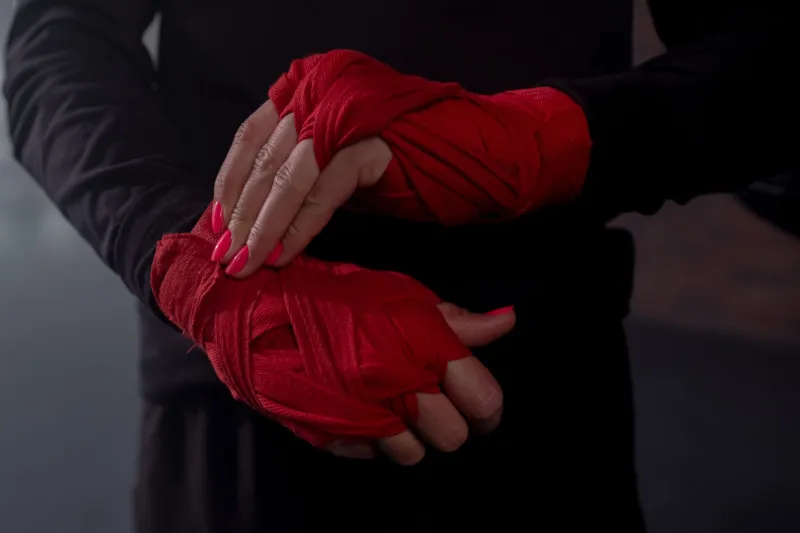
If you're spending money this month, spend it here. Two pairs of 4.5-metre cotton hand wraps, velcro closure, nothing technical. Two pairs because one is always damp, lost or in the wash. Cheap shiny wraps from the internet fray within a fortnight and bunch up across the knuckles, which is precisely where you don't want a crease.
Learn to wrap them yourself. A coach will show you on your first session, and after a week or two it's no harder than tying a shoelace. Wrapping your own hands is part of the sport — it's the ten minutes where you switch on and get ready.
Gloves come next, but not immediately. The club keeps a rack of spares for beginners, and a pair of 12oz velcro bag gloves will cover bag work, pads and most of what you'll do for the first few months. Leave the 16oz sparring gloves and the lace-ups until you're actually sparring — lace-ups need someone to tie them for you, which is fine on a fight night and annoying on a Tuesday.
Gum shields: boil-and-bite now, custom later
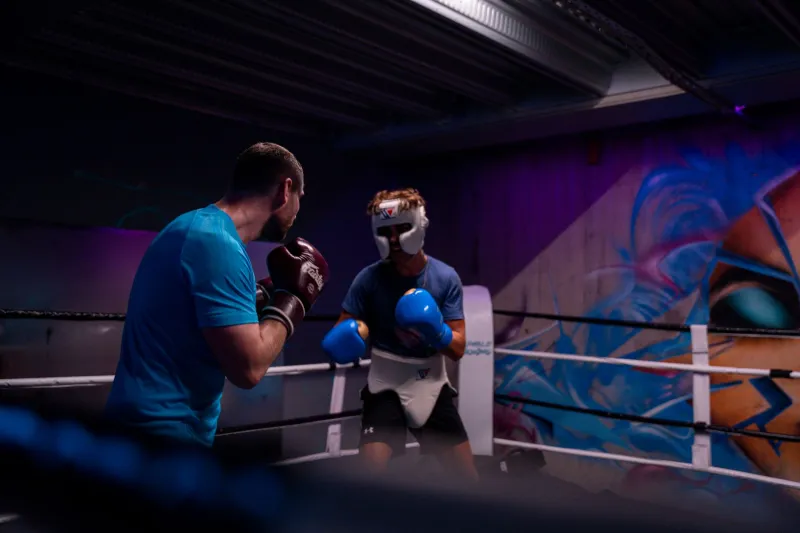
A chemist's boil-and-bite shield is fine to start with, and it's non-negotiable once sparring begins. When you're a few months in and still enjoying it, ask a dentist about a properly moulded one. Children's teeth move, so expect to redo the fit after a growth spurt — a shield that no longer fits is worse than useless.
Boots, laces and the canvas rule
Boxing boots are flat, thin-soled and give you a bit of ankle support. Running trainers are not, and they'll roll your ankle on a pivot. A basic pair of boxing boots costs less than a decent pair of school shoes and lasts longer than you'd think.
Two things coaches notice straight away: a spare set of laces in the bag, and the fact that nobody wears outdoor shoes on the canvas. Bring a second pair of trainers or a pair of flip-flops for the walk from the changing room to the ring.
The unglamorous half of the bag
- A towel. Ideally two. One for you, one for the bench you've just sweated on.
- A one-litre water bottle, filled before you arrive. Not a can of something fizzy.
- Spare T-shirt and socks. You'll thank yourself.
- A plastic bag for wet gear. The rest of the bag will thank you.
- Nail clippers and plasters. Long nails and a partner's face do not mix.
- A roll of zinc oxide tape, if you're getting into sparring.
- A name tag. The lost property box by the door is a museum of unclaimed gloves.
What can wait
Headgear, unless you're sparring regularly. Personalised shorts and a matching robe. Weighted vests. Anything sold as a "sweat suit" — those are a red flag, not a shortcut, and you can read why in our piece on weigh-ins. Buy those things when the sport has already given you something back, not before your second session.
Fit checks worth doing twice a season
Push your hand into the glove with wraps on and make a fist. Your knuckles should sit against the padding, not halfway down the palm, and the thumb should be enclosed. Boots need a thumbnail's width at the toe. Wraps should feel snug across the hand and firm — not tight — at the wrist. Kids grow; check again around half term and again after Christmas.
The habit that saves you eighty quid a year
Gloves go in the bag wet and come out of the bag smelling like a pond. Air them every single session, wipe the lining with a cloth, and never leave them in a hot car or a cold shed. Wash your wraps at 30 degrees in a mesh bag and hang them to dry — the tumble drier destroys the velcro. Rotating two pairs of wraps doubles their life. Check the stitching on your gloves every month or so; a re-stitch is cheap, a blow to the knuckles is not.
Last word from the corner
Your first bag doesn't need to be impressive. It needs to be clean, complete and ready to go at ten past six on a wet Tuesday. Everything else can be earned.
If you're unsure whether a piece of kit is worth it, ask a coach before you buy it. We'd rather tell you now than watch you carry it around unopened until March.