Before the Whistle: How Earlsfield ABC's Young Coaches Earn Their Place
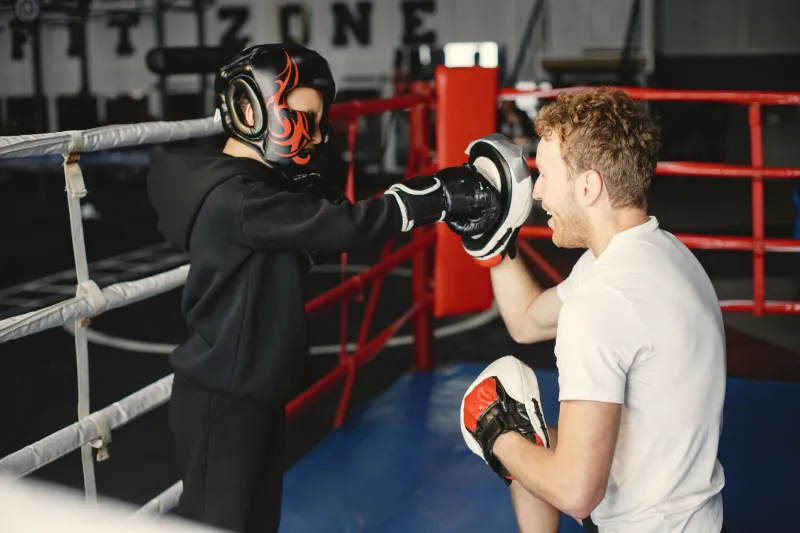
The shutters at Earlsfield ABC come up at 8:40 on a Saturday. By 8:45 the gym smells of coffee, liniment and rubber mats that never quite dry. The first people through the door are not the six-to-twelve-year-olds who will fill the place an hour later. They are the junior coaches: teenagers and early twenty-somethings in club hoodies, carrying pad bags and a clipboard that has seen better days.
They are not paid much, and most of them are not paid at all. They are boxers first, assistants second, and they are learning a job that the club believes cannot be taught properly from a classroom. At Earlsfield ABC, the coaching pathway starts on the gym floor, in the half-hour before the whistle, when nobody is watching and everything still needs doing.
The 8:45 Huddle
The junior coaches gather by the ring apron while the senior coach runs through the session plan. It is not a grand briefing. It is a list of names, a couple of warnings and a reminder about the new starter who might need a bit of extra patience. One assistant is asked to take the warm-up. Another is on pad duty for the first group. A third is quietly told to keep an eye on a lad who has been off school with a bug and looks pale.
That is the first lesson of the morning: coaching is mostly noticing. The junior coaches are not there to bark orders or pretend they are in a corner at York Hall. They are there to make the room work. That means setting out water bottles, checking hand wraps, knowing which parent is running late and which child has forgotten their gum shield for the third week in a row.
It also means being the friendly face at the door. A nervous newcomer will often walk in and look for the youngest adult in the room. The junior coaches know that. They have been that nervous newcomer themselves, standing by the stairs on Garratt Lane with a bag that feels too new and a stomach that feels too full of knots.
Pads Are a Language
Holding pads looks simple until you try it. The junior coaches learn quickly that a pad is not just a target; it is a conversation. Hold it too high and the jab goes over the top. Hold it too low and the boxer drops their guard to reach it. Hold it too still and you teach bad habits. Hold it too hard and you rattle a beginner who is still working out which hand goes where.
The senior coaches watch the assistants closely in these early weeks. They correct grip, stance and timing, but they also correct tone. A junior coach who shouts at a nine-year-old for dropping their right hand is not coaching; they are performing. The club wants assistants who can say the same thing quietly, with a smile, and get a better result.
There is a practical side to this, too. Every junior coach has to complete the club's safeguarding induction and understand why the right ratios and the right behaviour matter. They are not left alone with groups until they are ready. The pathway is gradual: watch, assist, lead a small drill, take a warm-up, then eventually run part of a session with a senior coach in the room. Nobody is thrown in at the deep end. The club has seen too many young coaches lost that way.
Spotting the Quiet Ones
One of the hardest skills to teach is spotting fatigue before it becomes a problem. A child who is breathing hard is easy to see. A child who has gone quiet is not. The junior coaches are taught to look for the boxer who stops chatting, who lets their hands drop between drills, who suddenly cannot get their feet moving. That is often the moment to pull them out for a water break rather than push them through another round.
The same instinct applies to nerves. On a cold November morning, a new starter might stand by the wall with their hood up, convinced everyone is watching them. A junior coach will often go over with a pair of loan gloves and a simple question about school, football or whatever is on their phone. No big speech. No pressure. Just a bit of human contact before the bell.
That approach comes from the top. Earlsfield ABC has built its reputation on being a club that develops people, not just boxers. The junior coaching pathway is part of that. It gives older members a reason to stay when their own competition days slow down, and it gives younger members someone to look up to who is not quite an authority figure yet.
Made on the Gym Floor
By 10:30 the gym is loud. Pads are cracking, skipping ropes are whipping the floor and someone has inevitably forgotten their water bottle. The junior coaches are in the middle of it, moving between groups, tying laces, correcting a stance, checking that the new kid has not been left on their own.
They will make mistakes. They will hold a pad at the wrong angle, miss a cue, or forget to pair up the shy one with a sensible partner. The senior coaches expect that. The point of the pathway is not to produce polished coaches overnight. It is to produce people who understand the gym from the inside, who know the families, the routines and the unwritten rules.
That is why the club believes the best coaches are made on the gym floor. A course can teach you the technical syllabus. It cannot teach you how to settle a nervous parent at the door or how to make a twelve-year-old laugh after they have messed up a combination. Those things come from repetition, from watching good coaches work, and from being given just enough responsibility to grow into.
What the Kids See
The children who fill the Saturday session do not see the 8:45 huddle. They do not see the clipboard, the safeguarding checks or the quiet word about the pale lad who needs an early water break. They see a young coach in a club hoodie holding the pads steady and telling them to breathe. They see someone who was once exactly where they are standing.
That is the quiet power of the junior coaching pathway at Earlsfield ABC. It builds leaders without making a fuss about it. It gives young people a role, a voice and a reason to turn up on a cold Saturday morning. And it keeps the club honest: a place where grit, heart and community are not just words on a banner, but the things you learn to pass on.