The Three-Second Rule: What Earlsfield ABC Coaches Don’t Say on the Pads

The noise before the quiet
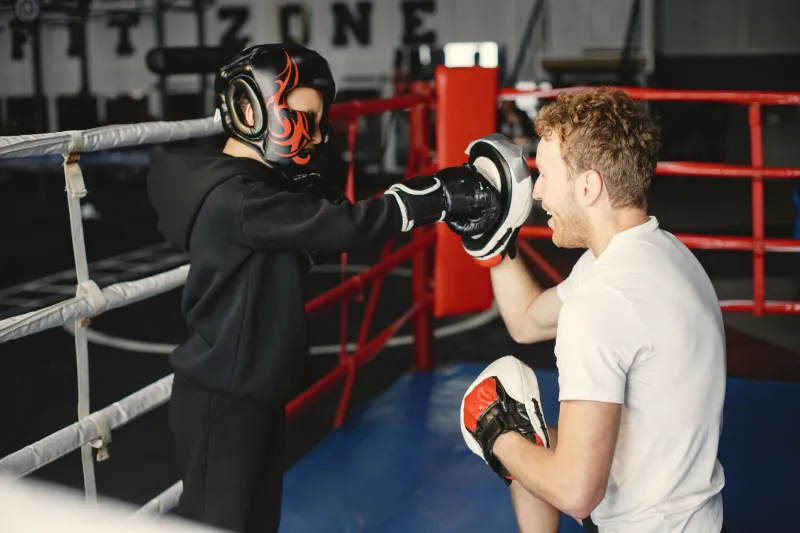
Saturday morning at Earlsfield ABC sounds exactly as it should. Bags thud against the far wall, skipping ropes whip the floor, and someone near the door is being talked through their first proper stance on Garratt Lane time. Then a coach steps in with the pads, and something unexpected happens.
He goes quiet.
Not distant. Not distracted. Just quiet. The boxer throws a three-punch combination, the pads snap, and the coach holds the next instruction for a beat. Then another beat. For three seconds, nothing is said. To a newcomer, it can look like a gap in the coaching. To anyone who has been in the gym a while, it is the coaching.
What the silence is actually for
Earlsfield’s senior coaches describe those small pauses as a working tool, not a personality trait. When a young boxer finishes a combination, they need a moment to feel what just happened: where their weight sat, whether their hands came back, whether their feet were still underneath them. If a coach fills that moment with noise, the boxer learns to wait for the next command. If the coach leaves it alone, the boxer starts to solve the problem themselves.
‘You can teach a combination in a minute,’ says one of the club’s pad coaches. ‘You can’t teach someone to notice their own balance in a minute. That takes space. Sometimes the most useful thing I can do is shut up and let them find it.’
That principle runs through the session. On the pads, it looks like a short pause before the next cue. At the ring ropes, it looks like a boxer being allowed to reset their own guard rather than being told five times. Between rounds, it looks like a corner that gives one clear instruction and then lets the fighter breathe.
A parent’s first impression
It does not always land immediately. One parent watching from the balcony admits she first thought the coach was disinterested. Her son had been working on his jab, and the coach stood with the pads up, saying very little. She had seen louder sessions elsewhere and wondered whether he was getting the attention he needed.
‘Then I watched again the following week,’ she says. ‘He was still quiet, but my son was the one talking. He was saying what he was trying to fix. That changed how I saw it.’
That is the point. Earlsfield’s quiet coaching is not an absence of care. It is a different kind of attention. The coach is watching for the detail that matters: a heel lifting too early, a chin drifting back, a boxer rushing because they are nervous rather than because they are sharp. The silence is not empty. It is loaded.
When a coach has to step in
None of this means coaches should stand like statues. Earlsfield’s approach is clear: silence is a tool, not a rule. There are moments when holding back would be poor coaching.
If a boxer’s hands drop repeatedly during sparring, safety comes first. If a young starter looks lost or upset, the coach steps in. If the same error keeps repeating after a clear cue, the instruction gets simpler and louder. And between rounds, if a boxer cannot remember the plan, the corner gives them one thing to hold on to — not five.
‘There is a difference between giving someone space and leaving them stranded,’ says another coach at the club. ‘You have to know the boxer. Some kids need a beat. Some need a voice right away. The mistake would be treating every session the same.’
The corner between rounds
Ring night makes the point best. In the corner, the crowd is close, the lights are bright and the boxer’s head is still full of the last exchange. A coach who talks non-stop can add to the noise. A coach who waits a second can read whether the boxer is listening.
At Earlsfield, corner volunteers are briefed to keep the message short: breathe, feet, one adjustment. Then let the boxer take it in. It is not glamorous work. It is often just a hand on the shoulder, a towel, a calm voice and a pause long enough for the fighter to come back to themselves.
That pause is part of the club’s grit. It takes discipline to stay quiet when your instinct is to help. It takes trust to let a young boxer make a small mistake and correct it on the next rep. And it takes a community that understands the difference between a coach who has checked out and a coach who is watching closely.
Boxers who can think for themselves
The long game is simple enough to say and hard to do: Earlsfield wants boxers who can adjust without waiting for permission. That matters in the gym, in sparring and on fight night. It also matters outside the ropes. A young person who learns to notice, decide and reset under pressure is learning something bigger than a jab.
So the next time you watch a session and hear a coach say very little, look at the boxer. Are they thinking? Are they resetting? Are they starting to own the work? If they are, the silence is doing its job. The loudest coaching at Earlsfield ABC is sometimes the nod that says: you found it yourself.